The Slack message hits at 4:47 p.m. on Friday, declaring, “WE WON!!”
The champagne emojis and confetti GIFs roll in, someone suggests celebratory drinks, and as creative director, you briefly experience a feeling you haven't felt since the pitch process started: peace.
By Monday morning, reality hits.
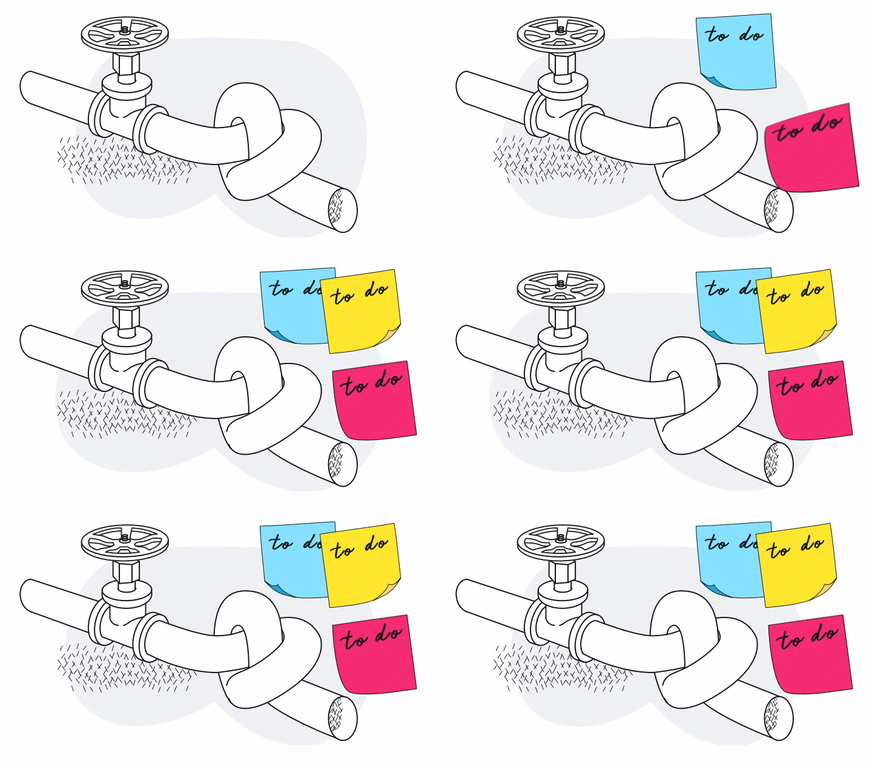
Kickoff is in a few weeks, and delivering on everything you just promised will require two designers, a copywriter, paid social support, and probably someone dedicated to motion. Your best people are booked. One designer has PTO coming up. And the client didn’t choose your agency because they were hoping you’d figure out the staffing situation eventually.
We’ve talked before about how to scale a creative team around a major product launch, and a big account win creates a similar challenge: a sudden influx of work doesn’t automatically justify a permanent influx of headcount.
For agencies, there’s an added wrinkle in that the new workload is tied to a client.
And clients, as we all know, are permanent right up until they aren’t.
Don't Hire a Permanent Team for Revenue That Hasn't Proven Permanent Yet
Winning a major account can make immediately growing your full-time team feel like the obvious next step.
But more work doesn’t necessarily mean you need more permanent employees.
The contract is signed, but the account has a ramp period, a defined term, and a client relationship that needs time to prove itself. Hiring several full-time employees for one new source of revenue puts you in a precarious position if the scope shrinks, the work changes, or the client eventually leaves.
A traditional hiring process doesn't necessarily care that your client’s kickoff is three weeks away. Sourcing, interviewing, portfolio reviews, approvals, offers, notice periods, and onboarding all take time. And frankly, sorting through a crowded applicant pool takes time you don’t have.
That's why the smarter first move after a big win is often to staff flexibly first and convert strategically later.
This isn't some fringe staffing workaround, either. Freelancers and contractors now make up 30% to 70% of many Fortune 500 marketing organizations, per Adweek, with major companies increasingly building teams of external specialists for ongoing work rather than using freelancers only for one-off tasks.
The question is no longer whether flexible talent can do important work; it's where it belongs in your staffing model.
Staff the Bottleneck, Not the Org Chart
Before you start hiring everyone mentioned in the pitch deck, figure out what actually has to happen first. Map the work before you map the headcount.
Where will delivery break first?
Maybe your ACD and senior creative team can own the concept, but production design is about to become a nightmare. Knowing that, staff design.
Maybe design is covered, but nobody has enough hours to write 47 landing pages, emails, ads, and social variations. Great! You’ll need to staff your copy team pronto.
Maybe the account includes a digital experience your existing team isn't built to execute. That might call for a specialized developer or even a Creative Engineer who can bridge design and development.
A useful order of operations is:
- Protect client leadership and strategy. Keep the people who sold the thinking close to the account.
- Add capacity where production will bottleneck first. Design, copy, digital, motion, video, development, paid creative: whatever the actual scope demands.
- Bring in specialized skills your core team doesn't need year-round.
- Watch the workload. Once recurring needs become obvious, you have much better information about which roles deserve permanent seats.
In other words, don't turn the pitch staffing plan into an org chart before the first status meeting.
Do the Margin Math Before You Add Headcount
Agencies don't just need enough people to deliver the work. They need to deliver it profitably.
Full-time hiring creates a fixed cost based on what you think the account will require, whereas contract talent gives you more room to match staffing costs to the work's actual ramp, scope, and timeline.
For instance:
- Need two designers heavily for the first eight weeks? Staff for eight weeks.
- Need a motion designer for one campaign phase? Don't create a permanent role for a temporary specialty.
- Need someone immediately, with the possibility that the workload becomes permanent? Contract-to-hire gives you room to test both the person and the long-term need.
That's particularly useful when the alternative is hiring ahead of proven demand. Contract talent can keep work moving even when permanent headcount isn't available. It can also give agencies more control over when labor costs expand, and contract as client needs change.
Flexible staffing isn’t about getting the work done for less. It’s about not making permanent hires based on work that may not be permanent.
Understaffing Is a Client Retention Problem
Of course, there's an opposite mistake here in the form of winning the account and deciding your existing team can "absorb it."
Maybe everyone comes off the high of happy hour ready to dive in. And you’re thinking, “Cool, my team has got this! We can all stretch to absorb the extra work for a while.”
But “for a while” is doing a lot of work there.
Longer hours and shifting priorities might get you through the first few weeks, but that’s not a staffing strategy.
Building the right creative team isn't only about skills; it's also about time and avoiding burnout. Fractured Atlas makes that case simple and clear. No one can handle everything at once, and continuously piling additional responsibilities onto the same people eventually affects the work.
When onboarding a new major account, it's not just an employee-experience problem but also a client-experience problem.
The first few months are when you're proving the pitch wasn't just a very pretty PowerPoint. Slow turnarounds, overloaded creatives, missed details, and inconsistent work don't communicate, "We're scaling."
They communicate, "You hired an agency that wasn't ready for you."
Speed of staffing is part of client retention.
Win the Account. Then Build the Team It Actually Needs.
Maybe six months from now, that freelance designer should become your next full-time hire. Great.
By then, you'll know the account is healthy. You'll know what the workload actually looks like. You'll know which capabilities recur every month and which ones appeared twice during launch. You'll also know whether you're filling a temporary capacity gap or looking at a genuine permanent job.
That's when the work can tell you whether you need freelance or full-time talent; until then, don't celebrate your biggest account win by immediately creating your biggest fixed-cost problem.
Our advice:
- Celebrate and pop the champagne.
- Then call your staffing partner.
Because when an agency lands work bigger than its current team, the talent partner helping it scale isn't sitting somewhere outside the delivery model. They're part of how the agency delivers.
Artisan Talent helps creative agencies scale quickly with experienced freelance, contract, contract-to-hire, and full-time talent so your team can say yes to bigger opportunities without sacrificing the work, the margin, or the people already doing both.